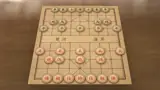
Xiangqi (Chinese Chess)
Cross the river and trap the other general
How to play
Xiangqi on Matsuri lets you play Chinese chess online against the computer or a friend, on the 9 by 10 board with the river and the two palaces, by the full rules: the flying general, the elephant's eye, the horse's leg, cannons that capture over a screen. Send a friend an invite link to play in Telegram or any browser, pass one phone between two people, or take on the computer. The pieces show their traditional Chinese characters or, if you prefer, small Western-style symbols. It runs on phone or desktop and inside Telegram via @MatsuriGamesBot, with no download or sign-up.
Xiangqi, Chinese chess, for two on the 9 by 10 board with the river and the two palaces, by the full rules. Red moves first. Tap a piece and the points it may go to light up, then tap one to move. The general and advisors stay in the palace, elephants never cross the river and are blocked when the point between is taken, a horse is blocked by a piece next to it, chariots run straight, a cannon captures only by jumping exactly one piece, and soldiers move sideways once over the river. The two generals may never face each other on an open file. Checkmate wins, and a side left with no legal move loses too. Repeating a position three times by perpetual check loses; other repetitions are a draw. Play the computer, send a friend a link, or play two on one phone, with characters or Western-style symbols on the pieces.
- Tap one of your pieces: the points it may go to light up (a ring means a capture). Tap one, or drag the piece there. Red moves first.
- The general and advisors stay in the palace; elephants never cross the river; a horse or elephant is blocked by a piece in its way; a cannon captures only by jumping exactly one piece; soldiers go sideways too once over the river.
- The two generals may never face each other on an open file. Checkmate wins, and so does leaving the other side no legal move. Perpetual check loses; other repetitions are a draw.
How to play xiangqi (Chinese chess rules)
The pieces stand on the points where the lines cross, not in the squares. Each side has a general, two advisors, two elephants, two horses, two chariots, two cannons and five soldiers, and Red moves first; whoever opens the table plays Red in the first game, and in a rematch the colours swap. The general steps one point straight and the advisors one point diagonally, and both stay inside their palace, the nine points marked with a cross. The elephant moves exactly two points diagonally, never crosses the river, and cannot move if the point in between (its eye) is taken. The horse moves one point straight and then one diagonally outward, and is blocked when a piece stands on the point next to it in that direction (its leg).
The chariot moves any distance along a line, like a rook in chess. The cannon moves the same way, but it captures only by jumping over exactly one piece of either colour, the screen, onto the enemy piece beyond. A soldier steps one point forward; once it has crossed the river it may also step sideways, but it never moves back. The two generals may never face each other on the same file with nothing between them, so a piece standing between them may be pinned. To move, tap a piece: the points it can legally go to are marked with dots, and captures with a ring. Tap one, or drag the piece there. A general in check glows red and the last move is marked.
You win by checkmate, when the other general is in check and nothing can save it, and also when the other side has no legal move at all: unlike in Western chess, a stalemate is a loss for the side that cannot move. If the same position comes up a third time with the same player to move, the game ends: a side that gave check with every one of its moves along the way loses, because perpetual check is not allowed, and otherwise the game is a draw. The Asian rules about perpetually chasing an unprotected piece are not applied here. A game is also drawn after 60 moves each without a capture, or when neither side has a chariot, horse, cannon or soldier left. Either player may resign at any time.
Xiangqi strategy and tips
- Open with a plan. Moving a cannon to the centre file (the central cannon) puts pressure on the other general from the first move; the usual reply is to bring a horse out to guard the middle soldier.
- Get your chariots out early. A chariot is the strongest piece on the board, worth about two horses or two cannons, and one that stays in its corner takes no part in the game.
- Cannons are strong early, when there are plenty of pieces to use as screens; horses grow stronger later, when the board is open and few pieces block their legs.
- Keep your advisors and elephants. They cannot attack, but they guard the palace, and a general without them is easy to mate with a chariot and a horse or a cannon.
- Use the flying general. Your own general controls its file, so in the endgame it can pin a piece or take away the escape squares of the other general, and the attack often decides the game.
- Push soldiers across the river. Before the river a soldier is worth little; across it, and especially near the palace, it can take part in a mating attack.
Modes and difficulty
Play the computer: it searches a few moves ahead, then follows every capture to the end, judging material and where the pieces stand. It thinks for a tenth of a second or so a move and never leaves a piece hanging, so it beats most casual players, but someone who plans and knows the basic mates can beat it. Play a friend: open a table and send the invite link; anyone else who opens it can watch. 2 players, 1 phone: two people share one device, passing it back and forth, Red at the bottom, and nothing is recorded or paid there. A table with a friend has no clock, but a turn left for a whole day loses the game.
Playing Xiangqi (Chinese Chess) on Matsuri
The server keeps the board and checks every move, so only legal moves can be played, and it decides checkmate, a side left without moves, perpetual check and every kind of draw. The pieces carry their characters, the traditional ones (帥仕相傌俥炮兵 for Red, 將士象馬車砲卒 for Black) or the simplified ones in Chinese, and a button on the table switches to small symbols instead: a crown, a shield, an elephant, a horse, a tower, a cannon and a pawn. A game pays a little candy once at least 20 moves have been played: against a friend 15 for a win, 8 for a draw and 5 for a loss, against the computer 6 for a win, within the day's candy budget. The board comes in a classic look, a wooden board with ink lines and the river's words 楚河 漢界, and a candy look where Mocha, who runs the hall, is the opponent and cheers you on.
A little history
Xiangqi belongs to the same family as chess, games descended from or related to the Indian chaturanga, and took the form played today in China during the Song dynasty, around the 11th and 12th centuries. The river is named after the war between the states of Chu and Han that followed the fall of the Qin, which is why it reads 楚河 漢界, the Chu river and the Han border. It is one of the most played board games in the world, in China and Taiwan, in Vietnam, where it is called cờ tướng, and among Chinese communities everywhere. Korean janggi is a close relative with a different board and rules.
Questions
- Can I play xiangqi online with a friend?
- Yes. Open a table, send the invite link, and your friend plays in Telegram or any browser. Anyone else who opens the link can watch. You can also play two on one phone, or against the computer. There is no download or sign-up.
- Does it use the full rules of Chinese chess?
- Yes: the palaces, the river, the elephant's eye, the horse's leg, cannons capturing over a screen, soldiers moving sideways across the river, and the flying general rule. Every move is checked by the server, so only legal moves can be played.
- Is stalemate a draw in xiangqi?
- No. A side with no legal move loses, whether or not its general is in check. This is one of the main differences from Western chess.
- What happens with perpetual check and repetition?
- When the same position comes up a third time, a side that gave check with every move along the way loses. Other repetitions are a draw. The more detailed Asian rules on perpetual chasing are not applied.
- Can I play without reading Chinese characters?
- Yes. A button on the table switches the pieces between their characters and small Western-style symbols: a crown for the general, a shield for an advisor, an elephant, a horse, a tower for the chariot, a cannon and a pawn.